Search
Search
1056 results were found.
Application techniques
There are 2 reroofing application techniques we want to highlight: bridging and nesting.
Bridging method
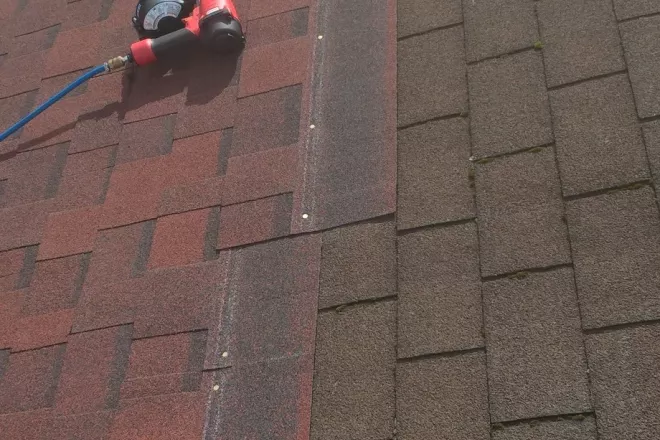
The bridging method allows the new course of roof shingles to overlay 2 or 3 courses of the existing roof shingles. This method usually allows for the proper exposure of the roof shingles and is commonly used when applying metric-sized roof shingles over English-sized or over wood shingles. Installation using this method may lead to “telegraphing” of the underlying material.
Telegraphing (or telemarking) means that the old layer of old shingles can be visible in the new layer of shingles installed.

Nesting method
The nesting method usually minimizes the “telegraphing” noted above and is commonly used when applying English or metric-sized roof shingle over like-sized roof shingles. Nesting minimizes the uneven appearance of the roof when compared with bridging over existing roof shingles. Installation using this method may shorten the roof shingles exposure and uses more roof shingles.
The nesting method butts the top edge of the new roof shingle to the bottom edge of the existing roof shingle. This method sometimes is also called “Butt and run” technique.

Note:
Try fitting the new roof shingles into the existing layers prior to deciding whether to use this technique. The existing exposure (the exposed part of the roof shingles) mainly determines what the new visual part will be.
Conclusion:
Reroofing is a great option for those who have a generally good roof which is at the end of its life cycle or a roof that is slowly losing its function. As opposed to a roof replacement, it does not involve tear off, which means that it reduces both time and cost for the project. It is always a good idea to consult with a roofer you trust, who can do an inspection, give you an accurate estimate, and who will advise you on what the best option is for you.
Interested in the product mentioned in this blogpost?: